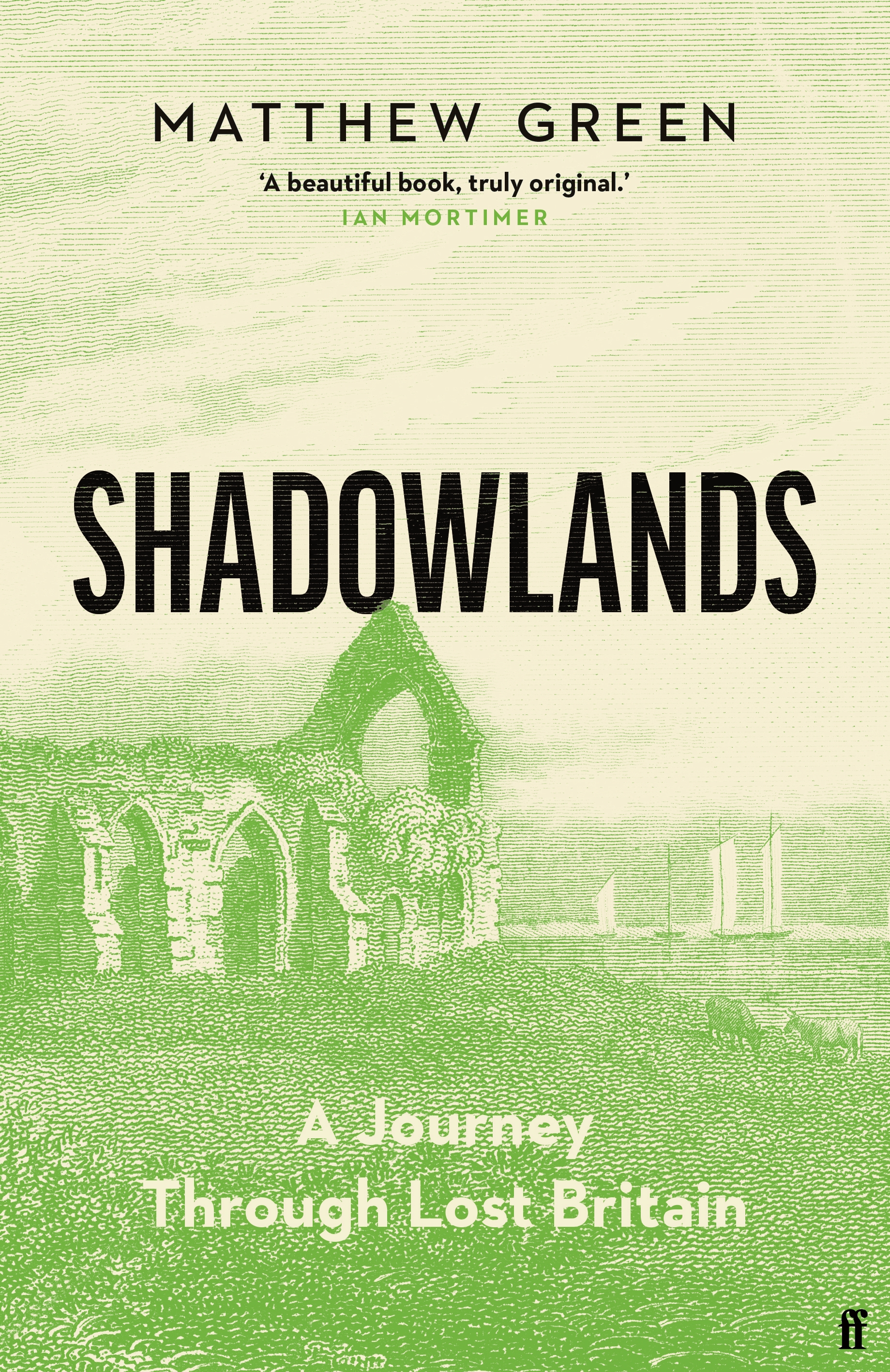
Shadowlands by historian Matthew Green is a non-fiction exploration of vanished communities, abandoned homesteads, lost cities and drowned villages. Told in chronological order it covers a handful of topics and offers a fascinating look at areas of Britain that are now either abandoned or lost to the sea. Green is a superb writer, and manages to deftly balance the facts and background of each subject with his own achingly haunting prose as he details his own personal journey to each location. There are eight main chapters – covering Skara Brae in the Orkneys, the lost city of Trellech in Monmouthshire, Winchelsea, Wharram Percy, Dunwich (which was claimed by the sea), the island community of St Kilda, the eerie outposts of Norfolk that were utilised by the military, and the village of Capel Celyn, drowned to make way for a reservoir.
There’s so much more going on here. The book is littered with snippets of trivia and facts that even those not seemingly interested in history won’t help but find captivating. Brilliantly researched, this feels like a labour of love to the author. Green wonderfully manages to capture the imagination, his prose bringing to life the finest detail of each location. You can feel what it must have been like to life during these times. I knew very little about the subject beforehand, but I feel like my knowledge of British history and geography has been hugely enhanced by reading this.
There are illustrations scattered throughout, which help the reader visualise that which is now gone. The book is haunting, beautiful and sad, reminding us that the passage of time has casualties, some caused by nature, some of our own making. I thoroughly enjoyed this and have no hesitation in recommending it.
As an aspiring writer I’ve read many ‘how to’ books over the years. There are thousands out there, probably hundreds of thousands. Some are more well known than others. This has probably more to do with the person writing them, than the quality of the advice contained with the book. A great deal of the time the advice is repeated. This is usually because the advice is sound. But it does tend to make these kind of books slightly samey when it comes to reading them. Which brings me to Telling Stories – the Craft of Narrative and the Writing Life by Lee Martin. This one felt rather different to the usual offerings.
I have never heard of Lee Martin. As far as I know this is the only book of his I’ve ever read. And yet his book is one of the most memorable ‘how to write’ books I’ve come across. Actually to classify this book as a ‘how to write’ piece of non-fiction is to do it a disservice. It’s far more than that. Martin talks about the mechanics of writing, sure, but there is so much more to it than that. It’s part memoir, part writing guide, part fiction theory analysis. By the time I had finished this book I felt like I knew a little bit more about Lee Martin’s life, his fears and hopes, his methods and aims. His book is accessible whilst also managing to not pander to the reader. I think it’s fair to say that Martin expects a level of writer who isn’t starting out with their first blank sheet of paper and pen. It’s assumed that the reader already has the basics and is in need of inspiration as well as encouragement. Martin discusses some more complex aspects of storytelling, so in this regard I’d say that this probably isn’t the first book you should read if you’re looking to start out writing for the first time. In my experience, the path of writing is in itself a journey of discovery. This book is something that you’d expect to come across quite a way along the route. But, in a way, it’s exactly that that makes it rather unique. I have a feeling that Telling Stories will be a book that I return to again and again in the future.
Manchester Uncanny (Confingo Publishing) is the fifth short story collection by Nicholas Royle, covering tales written between 2003 and 2022, including three original ones. The book design and contents act as a counterpoint to London Gothic from the same publisher (with a promised Paris version forthcoming). These stories deal with the place of Royle’s upbringing, with its industrial haze and rich cultural history acting as touchstones to the themes that shape the prose. These streets are haunted by the spectres of Shipman, Brady and Hindley, populated by damaged characters dealing with broken relationships, facing sinister depictions of darkness and isolation. Real-life figures are mentioned – Ian Curtis, James Anderton. Royle’s unique voice shines through in all the stories, even the more experimental ones like Disorder (utilising only the lyrics from Joy Division’s 1979 album Unknown Pleasures), The Dark Heart (in which the nine sections that comprise the story can be read in any order) and Strange Times, which is made up of messages presumably sent and/or received during the Covid pandemic which reflect the – well – strange time that we endured.
My favourites include The Child, in which the narrator returns to Manchester after spending years away, only to come across a DVD of a dodgy film confiscated by the police in the 1970s. There’s a powerful sense of nostalgia and regret in Nothing Else Matters. Salt has a delightful sense of foreboding as a student visits the all-too-quiet home of a tutor in an effort to discuss some coursework. In Someone Take These Dreams Away our narrator’s concern over an old school friend begins to intrude into his obsession for late 60s British films. In The Apartment a single man living alone hears voices coming from the apartment above; the puzzling aspect is that he lives on the top floor of the block. Simister tells the story of recently separated Adam, whose responsibilities in caring for an elderly neighbour take on startling consequences. In Safe a young woman buys a flat containing a mysterious item left by the previous owner (this one has a delicious final line). Zulu Pond was originally published as Alsiso and also concerns a man returning to his childhood haunts after spending years away, only this one involves a secret fishing location and some dark thoughts that plague the central character’s mind. Zulu Pond happens to be one of the best stories I’ve read in years.
Nicholas Royle’s fiction tends to touch on themes and motifs that absolutely chime with me as a reader – identity, memory, regret, dreams, coincidences, repetition. He’s the master at subtlety. Sometimes the hints and clues are so subtle I have to reread the story to pick up on these indicators. He has a unique way of blurring the line between something being autobiographical and something being fictional. He draws you in. I suppose it’s as much about what he leaves out of the prose as what he puts in that makes it so impactful. He doesn’t pander to the reader, his fiction is sometimes ambiguous, often numinous, always rewarding. There is also a great deal of humour there. This latest collection is as good as anything he’s written. It comes highly recommended.
Sixteen year old Dan Moore arrives with his recently-divorced mum, Jude, at a caravan park on the Norfolk coast for a week’s holiday. It’s late summer of 1985. They’ve had a tough year and the prospect of a few days’ escape of sun, fun and relaxation feels like just the tonic they need. Dan quickly hits it off with Charlie, a girl of a similar age who lives at the holiday resort, and his mum becomes romantically involved with a local property developer. However things take a sinister turn when one of the camp attendants goes missing, only for her body to be discovered several days later near the town’s derelict lido…
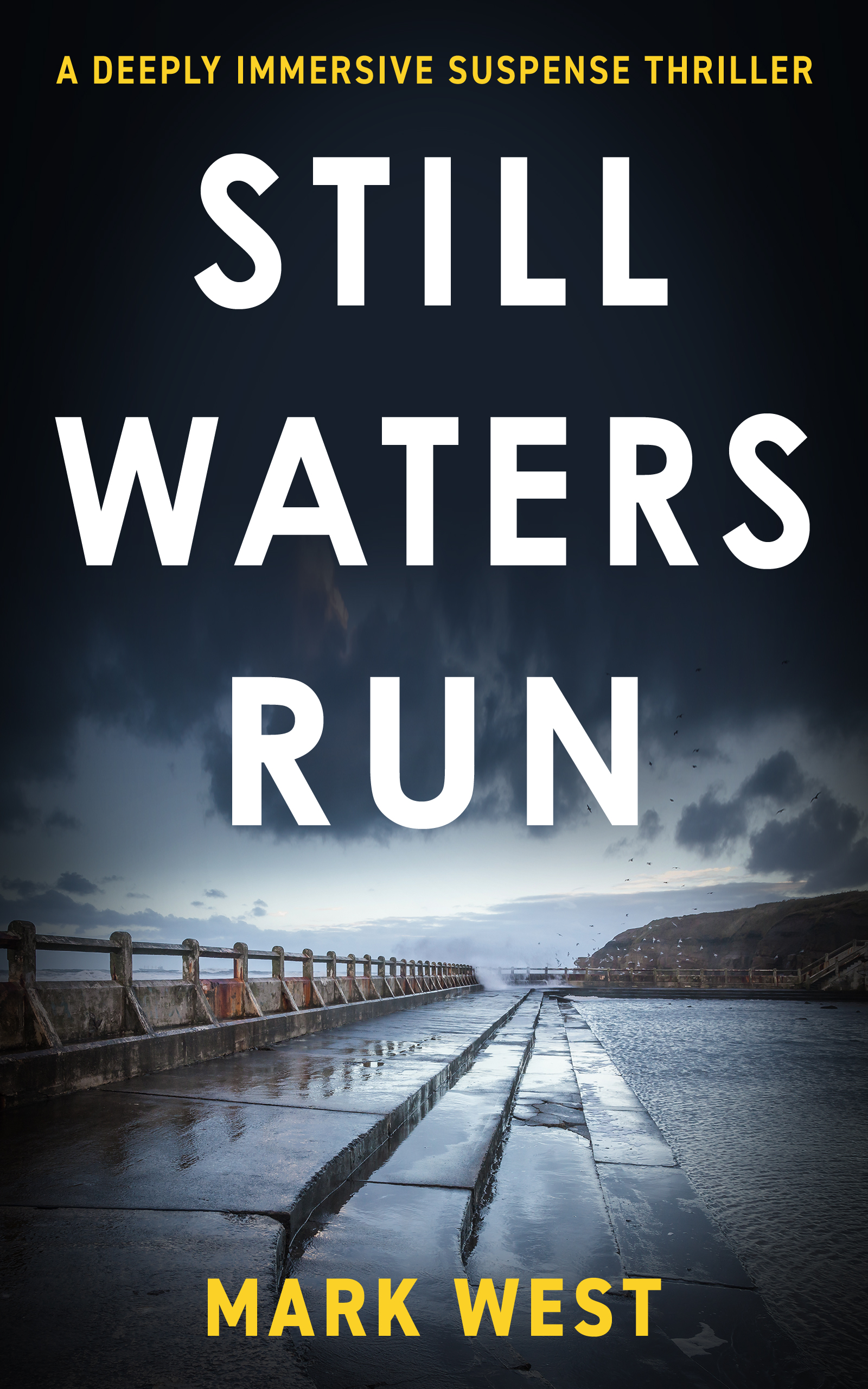
Still Waters Run is the fourth novel published by The Book Folk from the pen of Mark West, following Don’t Go Back, Only Watching You and The Hunter’s Quarry. Like the previous books, this one too features a superb blend of punchy suspenseful prose, edge-of-your-seat plot twists and masterful characterisation. West’s pacing is always spot on, but this one takes its time to set up the scenario and introduce the characters, an assured opening that confirms how totally in control of his craft the author is. This also allows the location to become a vivid element of the story, something that enhances the atmosphere and adds a clear distinction to the narrative.
I really enjoyed the nostalgia of this piece, and the prose is peppered with pop-culture references and long-forgotten (at least to this reader) song titles. I’ve always been a sucker for coming-of-age stories and West yet again delivers with this latest novel, one that successfully ticks all the required boxes for a suspenseful thriller. There’s an interesting romantic aspect for Jude here too, and one that has much to say about the desires and vulnerabilities of middle-aged characters, an angle that is often neglected in crime fiction.
I will hold my hand up and admit that I thought I had guessed the twist but, alas, I was wrong, as the author managed to throw in subtle aspects of misdirection that completely wrongfooted me. You can almost feel the salt tang on your lips as you follow the exploits of Dan and Charlie’s investigation into the mysterious death, which at first feels reminiscent of those teenage detective stories from my youth (such as The Three Investigators or the Hardy Boys or Nancy Drew) but quickly develops into something much darker as the story progresses to its thrilling conclusion. I had a real blast reading this. West has a flair for creating realistically vulnerable characters and throwing them into terrifying situations, and this feels like his most accomplished novel yet. As such, this comes highly recommended.
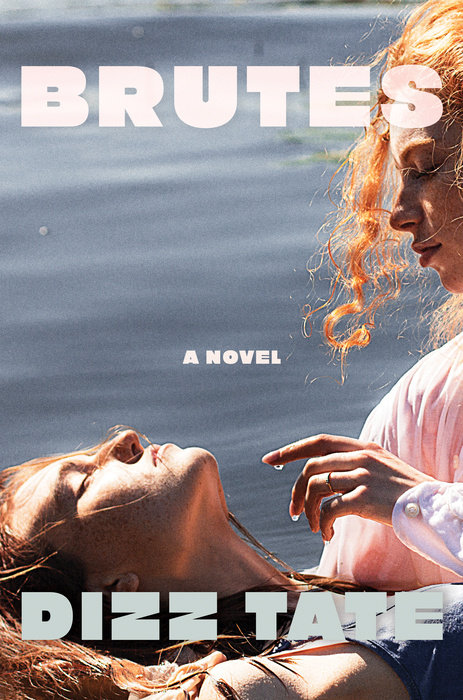
Brutes is the debut novel by Dizz Tate, detailing the disappearance of a pastor’s daughter and a clique of Floridian teenage girls and their view of the world. The claustrophobic narrative is ambitious for a first novel, with different characters appearing at intervals to add to the overall structure of the story. The girls themselves are not very nice – hence the book’s title – but there is fun to be had in seeing the whole thing unfold. Beneath the dreamlike prose there exists a dark undercurrent of foreboding and a rather sinister plot. The steamy, alligator-infested lakes lie in stark contrast to the family-friendly facade of Walt Disney World, and the novel nicely evokes a sense of unsettling disquiet. This is a coming of age novel, but it’s nothing overtly original, coming so soon after Emma Cline’s The Girls, The Virgin Suicides by Jeffrey Eugenides and Suzanne Berne’s A Crime in the Neighbourhood, which trod similar paths.
Having said that, it’s certainly well written, although one does feel that Tate will go on to better things. The chapters jump forward and back in time, and this isn’t always obvious, so it’s a challenging read at times. It’s not a book that I could recommend however.
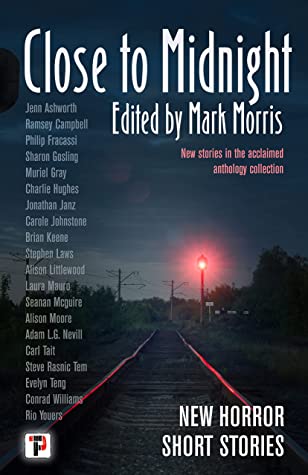
Close to Midnight is the third entry in this annual series of original horror anthologies published by Flame Tree Press and edited by Mark Morris. Like previous volumes, the contributions come from a superb array of leading contemporary authors, plus a couple carefully selected from work submitted during an open submission window. As I noted in my reviews of After Sundown and Beyond the Veil, this is a perfect way of ensuring quality whilst also allowing an opportunity for emerging writers, something that helps keep the genre fresh and progressive.
Although this anthology is a non-themed, it’s natural that a global event such as the Covid pandemic will undoubtedly have influenced the tone of the stories, so it’s no surprise to see that many of the entries touch on loss – both literally and metaphorically – as well as a lack of control. Rather than being a negative, this actually gives the anthology a loose connective thread, and illustrates, through a superb diversity of quality prose, how the past few years have affected our lives.
As with any collection of short fiction, I should qualify things by saying that not all will work for every reader. I preferred some to others, as is my personal taste, and I’m sure every reader will have differing favourites. That’s the nature of anthologies and short story collections, and this personal divergence is one of the reasons I enjoy them so much. However the overall quality of stories in Close to Midnight is incredibly high, so much so that I wouldn’t be surprised to see a couple of them make the annual Best Of lists for 2022.
Rather than going through each tale separately I’ll just highlight a couple that stood out for me in particular. Alison Littlewood’s In the Wabe details a mother’s anguish over her five year old daughter Vivian, who vanished one day in Central Park. References to Alice’s Adventures in Wonderland are alluded to, and the story has some superb elements of the uncanny as it messes with age and perception. It does a brilliant job of reminding us of how quickly life goes by. It’s a story tinged with regret, but it works both as an example of weird fiction and also as a dark unsettling reminder of what we once were and what we will eventually become.
I Promise by Conrad Williams is a quiet piece, telling the story of Alex, grieving the death of his father, and how the whole process is taking its toll on his relationship with his girlfriend. Beneath the darkness there’s an honesty to the prose that will resonate with anyone who has lost a parent.
Jenn Ashworth’s Flat 19 deals with a woman struggling under the weight of being the woman she is expected to be – a wife, mother, work colleague, and other facets of her personal and creative life that she is trying to juggle. Eve takes the opportunity to escape this mundanity for a while, and possibly comes to regret the decision. It’s an engaging story, and says much about a woman’s role in the modern world.
Remains by Charlie Hughes is one of the best ghost stories I’ve read in years. It’s a chillingly sad tale, narrated by a murder victim whose body has been concealed in the urban wasteland of London’s Crofton Station. I loved the omnipresent narrator. It’s an elegiac story, and one that says so much about life in its brief wordage. I found myself thinking of this one long after I had finished the anthology, and it alone justifies the price of the book. Brilliant stuff.
Alison Moore’s Welcome to the Lodge is another entry tinged with melancholy and imbued with a strange dreamlike quality, as Helena visits a sleep disorder clinic in an effort to rid her of her nightmares. As ever, Moore never puts a foot wrong, treading a fine line between leaving things to the reader’s interpretation and giving us just enough hints to touch on the numinous.
Rise Up Together by Adam LG Nevill – the final, and longest story, in the anthology – is about a man’s trip to an out of the way coastal town to see an old friend. The unsettling details of the story are carefully built, and like any good weird tale, subtle and cumulative in their impact. This is another story that deals with a loss of control and touches on the events that take place outside of our understanding. It’s a fine tale to finish off what is a great collection of horror stories.
Close To Midnight illustrates what great shape the genre of horror is in. This series from Flame Tree Press seems to be getting better and better each year. There is much to look forward to. If you’re a reader who enjoys quality fiction of the dark kind, this is a series to be cherished. There isn’t a bad story in the entire book. Here’s hoping that it does well enough for the series to continue. Highly recommended.
I’ve long been a fan of the work of Christopher Priest, whose rather unique style of writing sits perfectly placed among the genres of weird and science fiction, magic realism and slipstream, blurring the lines and adhering to few of the tropes usually associated with these genres. Priest’s plots are always grounded in reality, with his subtle subversion of recognisable life creating an unsettling tone.
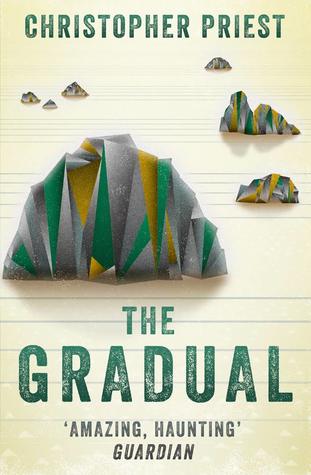
The Gradual features the central character Alesandro Sussken, classical composer, who lives in a fascist state on an island called Glaund, just one close to an area known as The Dream Archipelago. It is time of war, and the state-controlled media and transportation network emphasise the stifled constraints under which they live. When Sandro is sent on a cultural tour, he also embarks on a journey of mystery and discovery as he finds his life affected by the mysterious powers of the islands.
Priest loves messing with the reliability of perception, memory and identity, and temporal lapses often feature in his fiction. This novel has a haunting beauty to it, melancholy and unsettling, as Sussken journeys across the islands in a dreamlike-fugue. The use of first-person viewpoint poses questions about the reliability of the narrator, and yet none of this really matters, as the travelogue-style plot at least offers a framework around which the weirdness hangs. I’m not fully sure I understood all of its intricacies and layers, but the atmosphere and cumulative effect of the dream-logic prose left me thinking of the novel weeks after I’d finished reading it. A really enjoyable novel which will no doubt appeal to those who prefer their science fiction more subtle than space opera.
The Hunter’s Quarry is the latest novel from the pen of Mark West, following on from Don’t Go Back in February 2022 and Only Watching You in March 2022.
This one has a slight shift in tone to the previous books – in that the entire story takes place over the course of a single night – but you’ll be pleased to hear it still contains the same high quality of writing present in the others.
Single mum Rachel is caught in a deadly game of cat and mouse when she unwittingly picks up a package intended for someone else. A team of shadowy individuals will stop at nothing to recover the package, ruthless in their execution and relentless in their pursuit. Thrown together with Jack, a friendly face who is only in the area to attend a course, the two find themselves in a life or death situation as they fight to evade capture and make sense of what is happening. This one plays out like a cross between Alfred Hitchcock and Guy Ritchie, with our mistaken identity protagonists desperate to stay one step ahead of the ruthless villains.
It’s appropriate to mention film directors in this context because West’s prose has always had a cinematic quality to it, but here he ups the ante considerably. You can easily picture it on the screen. There is a blistering pace and a series of well defined set-pieces that keep the story fresh and exciting. But it’s the immediacy of the plot that propels the narrative. It almost feels like the action takes place in real-time, and this makes it feel quite literally a book that you won’t want to put down.
Rachel and Jack are engaging and likeable, and the dialogue crackles (something the author excels at). There are a couple of neat twists and the short chapters accentuate the breathtaking pace, all of which add up to a fantastic read. Perfect for a beach holiday, although I would heartily recommend this to anyone who enjoys a good fast-paced stand alone thriller. Mark West is going from strength to strength and carving out a great reputation and I, for one, can’t wait to see where he goes. This is one ride you won’t want to miss.
I’ve been a fan of the work of Ramsey Campbell from as far back as I can remember. Back in the day I always felt his novels had a rather different style to that of his short stories, however I’ve noticed more recently that this style seems to have spread across his output, giving him a very distinct tone and feel. This is to be celebrated, because I consider Campbell to be one of the most unique voices to come out of the British horror genre.
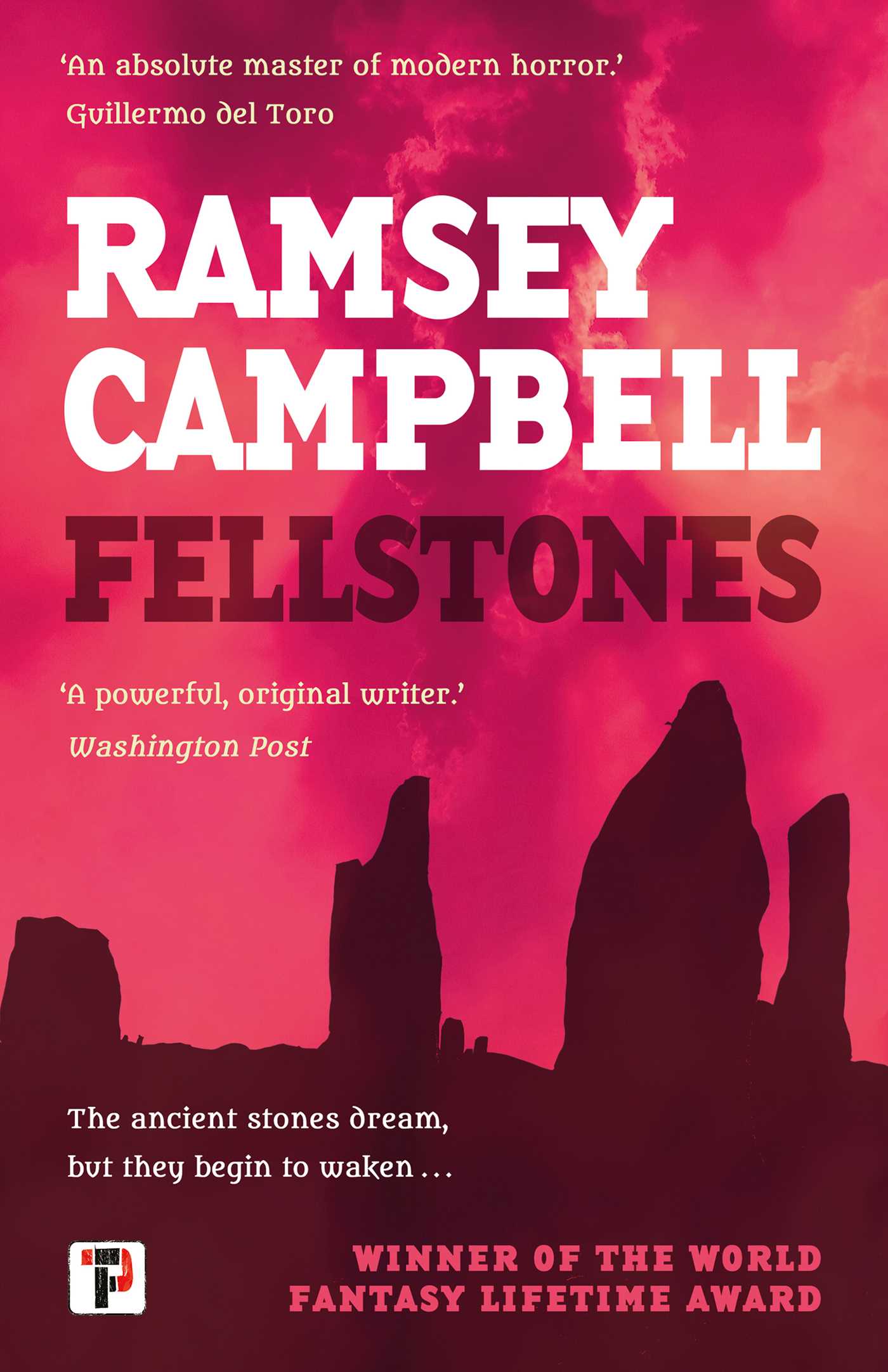
Fellstones tells of the story of Paul Dunstan, who was adopted by the Staveleys following the sudden death of his parents (for which he blames himself), who moved away and changed his name in an effort to escape their strictly controlling ways. When his adopted sister Adele finds him and persuades him to journey back to Fellstones, the small north-western village named after the seven stone monoliths marking the village green, he reluctantly agrees. What purpose do the Staveleys have in store for Paul, and what is real significance of those sinister standing stones?
As with much of Campbell’s fiction, the dialogue is quite brilliant, at times laugh out loud funny. He has such an ear for phrasing and a skill at building up layers upon layers of detail until the characters’ psychological torment is palpable. This novel blends folk horror with cosmic horror, and is a great example of how ‘less is more’ subtlety works to greater success in the genre of weird fiction. Whilst I was provided with an advanced reading copy of this novel in order to review, it’s worth noting that the formatting was so poor that it made the experience a very difficult one, and at times I considered giving up. It was only my awareness of Campbell’s writing quality that persuaded me to continue. Perhaps other readers might not have been so determined.
Fellstones is published in September 2022 by Flame Tree Press. It’s a solid entry to the genre, and won’t disappoint fans of Ramsey Campbell or weird fiction in general. Recommended.
Moonflower Murders is the second of the Susan Ryeland novels from the pen of Anthony Horowitz, following on from 2016’s Magpie Murders. Horowitz is a very proficient author and seems to be running a couple of series concurrently. I had recently read the third in his Hawthorne & Horowitz mysteries, A Line to Kill, which features the entertaining premise that the author himself is aiding a real-life investigator (grudgingly) and their strained relationship – as well as Horowitz’s (probably) fictional ruminations on the publishing industry – add an extra element to the proceedings. The Susan Ryeland series offers a different approach the modern novel – equally as engaging as the other – that a former editor of deceased crime writer Alan Conway is tasked with looking into one of his published novels in an effort to spot the clues highlighting the actual events of a contemporary murder (which acts as the framing story). It’s a rather complicated premise, this novel within a novel, but it makes for fascinating reading as the distinction between the framing story of today and the ‘golden-age’ setting of Conway’s Atticus Pund story – work in sharp contrast. There are also a plethora of easter-eggs and literary references which make reading these such good fun.
On the two books I’ve read so far, I preferred the 1950s golden-age setting more than the framing stories, and Horowitz makes a strong case for being an author who would succeed at the continuation novels of Agatha Christie, as Sophie Hannah has done with Poirot (albeit to varied success). Atticus Pund is very much a close shadow of our dear Belgian sleuth (although this time he’s a German Jew), and Horowitz shares Christie’s skill at plotting and delivering a satisfying slice of golden-age mystery. I really hope this series will continue. Later on in the year there will be a new Miss Marple short story anthology featuring twelve new tales written by a dozen of the genre’s best female authors, so hopefully it sells well enough to warrant new interest in the character, and brings about the commission of new novels featuring Miss Marple. I’d love to see what Horowitz could do with this. Moonflower Murders comes highly recommended.




 stephenbacon.co.uk