Eileen Dunlop is an unassuming yet disturbed young woman who lives with her alcoholic father in 1960s Boston. She works as a secretary at a local prison for boys, and has sexual fantasies about one of the guards, dreaming about escaping to the big city. Deeply introverted, and burdened with caring for her father – with whom she endures a difficult relationship – she shoplifts at the weekends and daydreams of a better life. But when a new counselor arrives at the prison, the beautiful and charismatic Rebecca Saint John, Eileen becomes enchanted by her. It’s a budding friendship that spirals out of control, pitching Eileen into the darkest of crimes.
Eileen is a rather downbeat book, which feels rather like a debut novel (although it isn’t). I was surprised to see that it was shortlisted for the Man Booker Prize. Not that I didn’t like it, but I perhaps was expecting a little more. The character of Eileen is captivating, if not wholly original, but the setting and 60s era add an extra element of repression to the proceedings. It’s set at Christmas, but isn’t very festive, and the wintry prose chills to the bone. The morose tone makes it at times a difficult read, but the pace picks up more towards the end as the almost Hitchcockian reveal propels us off in a different direction.
There has recently been a feature film adaptation of this novel, one of which I am keen to see as I think the subject matter offers a lot cinematically. As a novel, it’s steady and decent, and one I can recommend, but nothing groundbreaking enough for me to search out more of this author’s work.
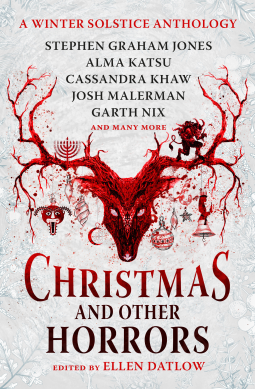
The anthologies edited by Ellen Datlow have always been, to me, an essential read, but when I saw the theme of her latest book – Christmas and Other Horrors: An Anthology of Solstice Horror – for the first time I felt a slight waver of enthusiasm. This was due to my (admittedly flawed) assumption that the contributions would likely be a collection of variations on a similar theme – stories set around the Westernised version or Christmas, or folk horror tales featuring Krampus. I’m pleased to say that my expectations were proved hopelessly wrong – I should have had better faith in Ms Datlow’s skill as an editor – because the stories in Christmas and Other Horrors do not fall into a traditional style and, as such, deliver a superb breath of scope in terms of tone and theme. There are even a couple of tales from Australian writers so even the wintry elements are mixed up with the summer feel of how those in the Southern Hemisphere experience it. To a reader from the UK this adds a surreal aspect to the story.
As with any anthology, what I find as a favourite will not necessarily match up with your choices, yet as an overall book of short stories, the breadth and scope is huge. There was only one or two that I didn’t really enjoy. The contributors do a fine job of illustrating the darker aspects of the winter solstice, picking up on the tradition of ghost stories told over a flickering fire, something that goes back as far as humans have existed. After each story is a short piece by the respective author, giving an illuminating insight into their own experiences and memories of Christmas, and what it means to them.
Return to Bear Creek Lodge by Tananarive Due is wonderful familial tale of (in the author’s own words) “intergenerational trauma”, a loose sequel to her previously-published story Incident at Bear Creek Lodge. Richard Kadrey’s The Ghost of Christmases Past offers a sinister alternative to child-eater Krampus in Gryla, an Icelandic witch whose supernatural counterparts have terrorised Laura since she was ten years old. The Visitation by Jeffrey Ford is a brief story, but none the more disturbing by its brevity, about the Angels of Accord who call at a house for assistance over the Christmas period, almost as a moral test. Australian Terry Dowling’s twist on the theme is refreshing and sinister, in The Mawkin Field, as our narrator comes across a refrigerator standing in a field in the middle of a backwater New South Wales town. This was one I was still thinking about weeks later. The always reliable John Langan’s After Words is a rather erotic tale of black magic and sex, told via a series of dialogues between a post-coital couple. Kaaron Warren’s Grave of Small Birds is one of the longer tales, about a gathering on an island for the Twelve Feast days of Christmas, a celebration of food and wine, but where ancient traditions still hold fast. Our Recent Unpleasantness by Stephen Graham Jones is a surreal tale in which a voyeuristic dog-walker sees something unsettling through one of his neighbours’ windows. Benjamin Percy’s heartbreaking yet unsettling The One He Takes is vividly told, featuring a grieving couple in snowy Minnesota who wake one morning to a Christmas miracle. But their joy is short-lived as they hear the approach of something dark and sinister…
Christmas and Other Horrors is yet another of Ellen Datlow’s original anthologies that mark her out as one of the best editors working today. The fact that she has had such a remarkable career over such a long time period is testament to her skill and hard work, and this latest collection of short stories comes highly recommended.
Darkness Beckons is the fourth annual horror anthology edited by Mark Morris and published by Flame Tree Press. Like its predecessors, this one is filled with an excellent array of dark tales, written by some of the best practitioners of short fiction working today. As Morris states in his engaging introduction, this book marks the first time that one of his anthologies has contained more female authors than males. I only mention this because it’s important to note that the genre is in constant evolution – not just with regards to gender parity or an emergence of writers from different social backgrounds – but also in terms of thematic tone and subject matter – and it’s certainly refreshing to see so many editors keen to bring new voices and viewpoints to a wider readership.
The stories in Darkness Beckon cover a wide range of what constitutes the horror genre; from folk horror to the more traditional ghost story, from the darkest heart of humanity to the weird tale’s outright macabre. There must be something here to satisfy the majority of horror fans.
As with every anthology or short story collection, every entry stands alone and, as such, each reader will find different favourites within the pages of the book. The standouts for me were the contributions I’ll mention here, but it’s important to state that I think the overall quality is of such a high standard, there wasn’t really any of them that I didn’t enjoy. In Dodger by Carly Holmes motherhood is painted in nightmarish terms, made even more unsettling by the thread of skewed truth discernable in its prose. The brilliance of He Wasn’t There Again Today by Peter Atkins is driven by a narrator with a strong voice; this one is quirky and fun. Reading Good Bones by Sarah Read actually induced a nightmare of bones and cobwebs in my bed, such is its power, where we find Jim visiting the home of elderly Mrs Kelsey in order to do some odd-jobs around her dilapidated house. The sinister subject of Stephen Volk’s Under Cover of Darkness is a recognisable character, and Volk’s story depicts what feels like an approximation of one of the grisly real-life events surrounding him, complemented by the author’s masterful prose. The Fig Tree by Lucie McKnight Hardy shows what happens when a couple and their two young children spend a weekend away in a Welsh cottage; this one has elements of folk horror and references elements of grossness that might just put you off figs for life.
They keep saying that the short story market is done, that nobody reads this stuff any more. But the quality of writing in these Flame Tree Press anthologies suggest that there’s a thriving industry in short horror fiction that should not be ignored. There are still wonderfully skilled writers willing to work at this length, honing their craft and developing ideas that speak about the very fears we have in the modern world. The Flame Tree Press anthologies in particular are important, because although each book includes commissioned contributions from seasoned writers, the publisher also allows emerging writers to submit original stories during an advertised submission window, which keeps the books feeling fresh and relevant. This one, like the other three before it, comes highly recommended.
I’ve been a fan of annual Best Ofs since I started buying books in WH Smith’s in the early 1990s and came across Best New Horror edited by Stephen Jones and Ramsey Campbell, which was my only source of reading short horror stories back in the pre-internet days. Of course there was an abundance of other horror anthologies around at the time in second hand shops – the Pan Books of Horror were everywhere, as were the teen horror collections edited by Peter Haining, the Dark Terrors series edited by Stephen Jones, the Ghost Books edited by Rosemary Timperley, and Robert Aickman’s Fontana Books of Great Ghost Stories.
But it was the annual Best Ofs that really excited me, because these were living proof that great horror stories were still being written, and these books collected together the editor’s favourites from the previous year. I bought and read them religiously. Once the internet became a thing I realised that there were several American versions, one of which was the Year’s Best Fantasy and Horror edited by Ellen Datlow and Terri Windling (until 2002 when co-editorship switched to Gavin Grant and Kelly Link). This ended in 2005, at which point it changed to Best Horror of the Year edited solely by Ellen Datlow.
These are an annual highlight, gathering together the creme de la creme of dark fiction published in the previous 12 months. Each entry is a delight, and this one, Volume Fourteen, is no different.
This anthology features 23 stories/novelettes and one poem, pulled from various sources, each of them dark, all of them superb. As with all collections or anthologies, some work better than others. I’ll mention a couple of my favourites, but it’s only fair to say that the quality is of such a high standard, there are no real bad tales here, it’s just a matter of individual taste. In The Offering by Michael Marshall Smith an American couple go on vacation with their teenage son to Copenhagen, only to find that the AirBnB they are staying in has a very demanding guardian. Steve Toase’s Dancing Sober in the Dust details a series of grotesque costumes created by a husband and wife team who became notorious for a grisly crime a century before. The detached nature of the descriptions left a chilling fascination in the pit of my stomach. The Strathantine Imps by Steve Duffy might not be the most original story that this fantastic author has ever written, but it’s a beautifully told tale up to his usual high standard. When Amanda and Euan’s mother dies, they are left in the sole custody of their father, in his isolated family estate on the coast of Ayeshire, Scotland. Dark forces are at work, and Amanda’s worst fears come true when a weird visitor to the house brings with him an omen of death.
Eoin Murphy’s Three Sister’s Bog is a dark unsettling fairytale set in the remote depths of Ireland. This is one of the best short stories I’ve read all year, creepy and sinister – almost nightmarish in tone. When the family dog gets lost in the nearby bog, Michael sets out from his farm with his young son, Charlie, in an effort to recover the lost pet. What they encounter is something I haven’t been able to get out of my mind for days. Eric LaRocca’s I’ll Be Gone By Then is a compelling conte cruel, heartbreaking and nasty, but threaded with a stark element of honesty in its telling. Both these stories are the first I’ve read by these writers, but I guarantee that I’ll be seeking out more of their work.
Shards by Ian Rogers at first seems like a riff on the old ‘cabin in the woods’ trope, but Rogers’ writing elevates this tale beyond the normal into the realms of excellence. Simon Bestwick’s Redwater follows a small group as they journey by boat into a swampy flood-land in search of an elusively vague MacGuffin. This one is pulpy fun, brilliantly paced and features some great action scenes.
All Those Lost Days by Brian Evenson is another highlight. When two brothers visit a theme park and take a trip on the Time Machine ride, they have no idea what the experience will do to one of them, and the impact it will have on the rest of their lives. In Carly Holmes’s Trap a mother and her two daughters set up a motion-detector camera in an effort to catch a glimpse of wildlife in the surrounding countryside. What footage is recorded is unsettling and disturbing. Another writer who is new to me, but one whose work I will look out for from now on.
Ellen Datlow has an amazing knack of getting the right balance for her selections for Best Horror of the Year. Horror is a broad church, and every year she manages to showcase stories covering the furthest reaches of the genre. Monster tales sit side by side next to literary disquiet, dark crime stories mingle with subtly grim fantasy. None of it matters. All that counts is the quality of the writing. This year’s is no exception. Long may this series continue. Highly recommended.
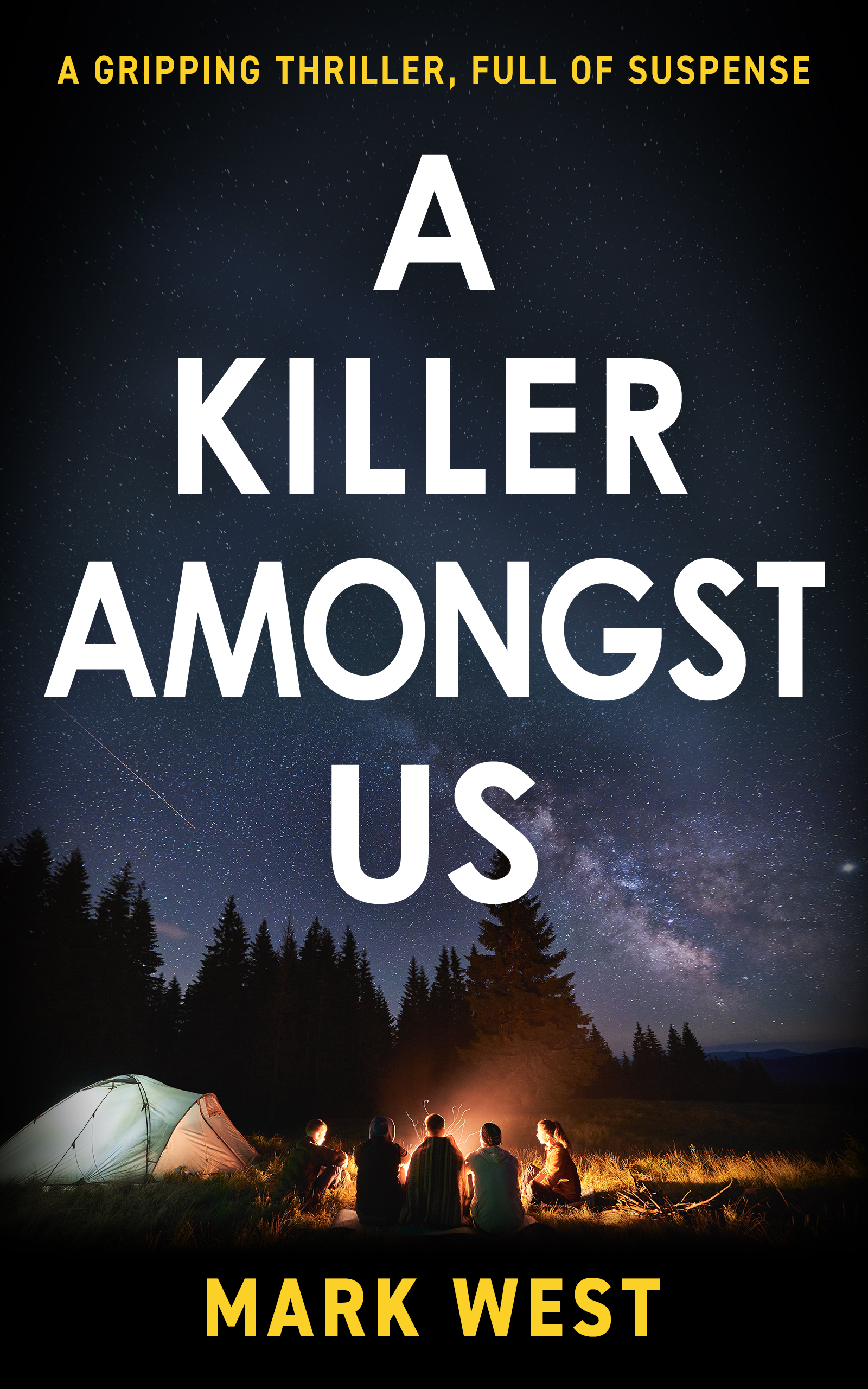
In an effort to revive their struggling marriage, Martin and Jo Harper decide to have a weekend away. The trip involves a night in a luxury hotel, but before that there’s a lengthy hike through the Northumberland countryside and an evening spent camping in the wilderness. Their fellow travellers seem a strange bunch, made up of a second couple and a single man, but their tour guide appears to be a trusted hand so they set off on the journey. Very soon they realise that they have no data or phone signal, but what the hell – they’re at one with nature. But after one of the members of the party dies in mysterious circumstances, and reports of a fleeting figure seems to indicate someone is following them, the remaining hikers must draw on all their survival instincts if they want to make it through the weekend…
A Killer Amongst Us is Mark West’s latest thriller, the fifth published by The Book Folks. Like his previous novels, this is a fast-paced suspense tale, populated by believable characters thrown together into an extraordinary situation. One of West’s strengths is his dialogue, and he quickly brings these characters to life. There’s a very contemporary feel to the novel – one of the characters is an online influencer, another is very much in touch with the pressures of modern life and the mental health onslaught that can come with it – and the way West strips them of their technology and throws them into a primitive survival battle is enjoyable and interesting. Threaded throughout the main narrative is a recent backstory that fills in details of some of the characters’ motivations, slowly revealing the truth which, when the moment arrives, comes as a hammer blow.
This is a realpage-turner, and cements West’s reputation – richly deserved in my opinion – as an author of distinctly readable thrillers, one with a bright future in the suspense genre. Highly recommended.
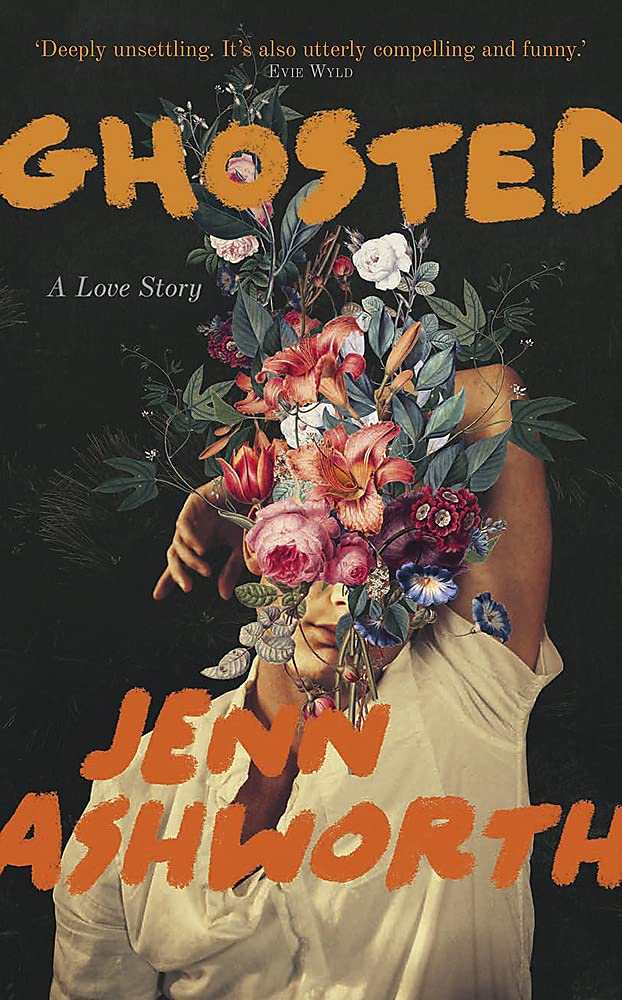
Laurie and Mark live on the sixteenth-floor of a block of flats in the north-west of England. She’s a cleaner at the university, Mark a security guard at the nearby power plant. One random day in May, Mark goes missing, leaving his phone and keys at home. Laurie tells no one for several weeks, carrying on with her life as normal. Visiting her dementia-suffering father and his Ukrainian carer as if nothing untoward has happened, eventually revealing the news to her work colleague. When the police finally find out, they are suspicious. Why did it take her so long to report his disappearance?
This is the first of Jenn Ashworth’s work that I’ve read in long form, everything prior to this novel was a couple of her short stories in various anthologies (all of which I’d enjoyed). Ghosted is an absolute masterclass in how to balance literary fiction with the implication of genre writing. Right from the start we’re plunged into the life of Laurie, a fascinatingly complex young woman living a rather unglamorous life. Ashworth teases us with subtle suggestions of her being an unreliable narrator. Or at least providing enough information to indicate that something in her past has had a dramatic impact upon her relationship with Mark. Also fractious is her relationship with her father, who is in the throes of vascular dementia, brought on by a stroke; his memories and the truth of the past fading like handprints on glass. There’s a strong sense of regret in their scenes together, of Laurie’s frustrations at how her father behaved towards her late mother.
Is this a crime novel or a ghost story? There are telltale signs of the supernatural – or are these just manifestations of Laurie’s stressed mind? She is certainly haunted by something, even if it’s her own psyche. The narrative structure unfolds like that of a crime novel, even with mention of a past murder in the area – apparently already solved – on the news. We begin to suspect that things are not quite as they seem. And we’d be right.
There’s an honesty about Ashworth’s writing that feels intimate and real. The characters’ flaws, the narrator’s acknowledged selfishness, is of the highest calibre and you feel compelled to follow this story through to its conclusion. Ghosted is heartbreaking, scary, funny and intensely moving. Jenn Ashworth has become one of those authors whose entire output I will seek out. This is a stunning novel and it comes highly recommended.
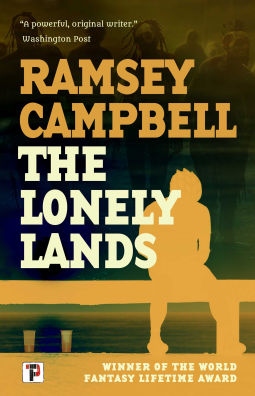
After the sad loss of his wife Olivia, Joe Hunter begins to hear her voice again, speaking to him from the other side. “I’m not alone.” This chilling statement eventually draws him into the afterlife, a tenebrous place built by their dreams and memories. The more that Joe yearns to communicate with his lost love, the more he threatens the safety of the barrier separating the two worlds. He comes to realise that the afterlife is a world where darkness dwells and shadows lurk and the restless dead strive to return to that of the living.
I’ve been a fan of Ramsey Campbell’s fiction since I first discovered him in the early 1990s. He has such a distinctly unique voice – he often manages to be both hilariously funny and bone-chillingly terrifying in the same sentence – and I’m pleased to report that in The Lonely Lands these magical qualities are still on display. This novel is set during the Covid pandemic, which adds an element of disturbing surreality, and this fact is not there just as a gimmick – the facemasks act as both an unsettling side detail and also an essential plot point. Poor old Joe is a sympathetic central character, and the novel is peppered with brilliantly-drawn, grotesque secondary characters. Campbell’s style – always engaging – possesses a nebulous dreamlike quality, perfectly suited to the nightmarish plots he creates. The narrative jumps around the various timelines, deliberately wrongfooting the reader. I never find Campell’s writing style easy to read, as his meaning is sometimes cleverly skewed by the characters’ dialogue, but this is a good thing really because prose of this quality should be savoured, not skimmed over.
The Lonely Lands is yet another terrific horror novel from one of Britain’s best authors.
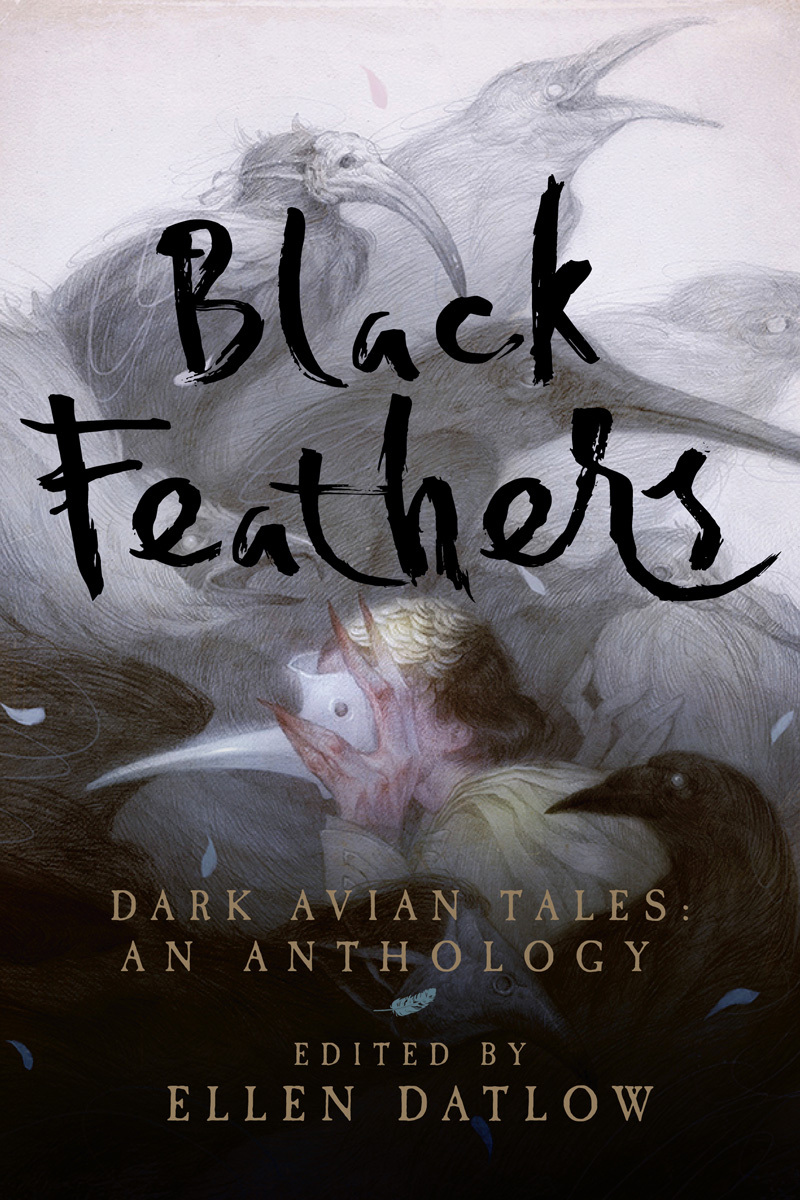
Birds have always held a fascination to writers of the weird and the uncanny. It might be the uneasy relationship shared between humans and our prevalent feathered friends, it may be that we simply understand that these creatures are likely to be the evolutionary ancestors of dinosaurs. Some of the earliest examples of classic horror stories are based around birds – I’m thinking specifically of ETA Hoffmann’s owl-like haunter of children, The Sandman, how The Birds by Daphne du Maurier made the familiar sight of our feathered friends unsettling, or Edgar Allan Poe’s supernatural narrative poem The Raven – so there seems to be a rich vein of unheimlich to be mined here.
Datlow’s anthologies are never less than entertaining and Black Feathers adds to her array of rightly-celebrated titles. There are sixteen entries (one being a poem), all of the highest quality, although I should also add that – as with all anthologies – some stories worked better for me than others. For example, one of the tales – M John Harrison’s Isobel Avens Returns to Stepney in the Spring – happens to be one of my favourite short stories of all time, and has been since I first encountered it in the mid 90s. The second reprint – The Obscure Bird – originally appeared in Black Static in 2011, and I had remembered how its seemingly straightforward prose bore all the unsettling hallmarks of Nicholas Royle at his best.
As far as I’m aware, all the other stories are original to this book. There’s a brilliant contribution from Joyce Carol Oates, heartbreaking and disturbing in equal measure. In Alison Littlewood’s The Orphan Bird, Arnold, an ornithological painter, reflects on childhood traumas caused by bullying and we get to see a startling insight into his disturbed world now. Blyth’s Secret by Mike O’Driscoll is an absolute cracker of a story, in which the narrator, Wil Blevins, ekes out a lonely existence in an isolated Welsh forest, close to where a young boy has gone missing. There’s a deep thread of discomfort running through this one, and the subtext is subtle and devastating, exactly the right side of ambiguous. Blevins’ jackdaw friend, Blyth, adds an element of psychology that brings to mind Norman Bates and his taxidermy obsession.
The Crow Palace by Priya Sharma tells the story of Julie and her twin sister Pippa, who fled the family home years before, following the apparent suicide of their mother. Pippa has cerebral palsy and Julie has to face the selfishness of her past, which is also entwined with mythology and a glorious slice of avian folk horror. This is a great way to end the book, finishing on a real high, with such a pitch dark tone, embodying the theme of the collection perfectly.
Black Feathers is a wonderful anthology, filled with stories from the best writers working today. Whilst I didn’t find every single story to be as engaging as the rest, there’s no denying the quality of the writing, and so this is a book that is easy to recommend. I’m sure even the most discerning reader of dark fiction will find much to love.
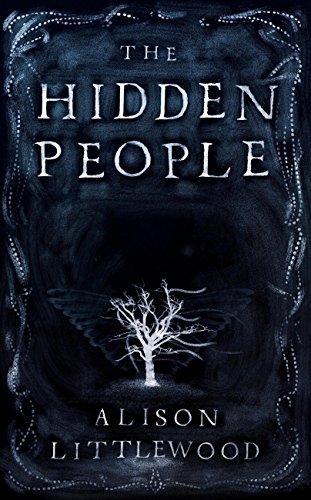
It is 1862. When Albie Mirralls discovers that his cousin has died in mysterious circumstances, he journeys to Halfoak, a village in the depths of rural Yorkshire that is steeped in superstition. Lizzie Higgs has been burned to death on her own hearth; her husband James is accused of killing her. He appears to have been suffering under the delusion that Lizzie had been stolen by the fairies, and that she was a changeling. The locals are a closed, untrusting group, and belief in the folk traditions are rife. Albie must investigate his cousin’s death and piece together the truth in the face of the Hidden People.
I started reading Alison Littlewood’s The Hidden People believing that the novel sat clearly in the horror genre. Littlewood’s previous novels featured supernatural happenings and gothic fantasy and – whilst it’s true it does indeed belong in the horror genre – I’d also say it fits equally as well in historical crime and dark fantasy. I like stories that blur genres. This particular tale is unsettling and uncanny, made more so by the Victorian style of writing. Subsequently it’s not a fast read, as the prose demands more attention than that of a contemporary style. But the locations are richly atmospheric and, at times, it is genuinely frightening. The whole thing grows as the book progresses and there’s a nice twist that feels like a bonus rather than a peg on which the whole story hangs. This is recommended to readers who enjoy historical mysteries, gothic fantasy or dark, subtle fiction.
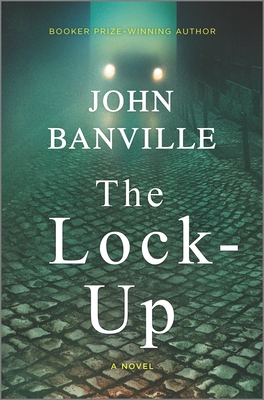
In a lock-up garage in 1950s Dublin, a young woman is found dead inside her car – an apparent suicide. But pathologist Dr Quirke suspects foul play. What is the connection between the dead girl and a wealthy German family?
This is the third in the Strafford novels by John Banville – following on from Snow and April in Spain – which in turn was an offshoot of the Quirke novels, written under the pen-name Benjamin Black. There is a great deal of crossover, so much so that they can be read as a continuation of the original series. I was drawn to the Quirke books by a love of classic crime fiction and historical mysteries, but these are possibly the antithesis of the traditional murder mysteries of Agatha Christie and Ngaio Marsh, in which it is often noted that characterisation comes secondary to intricate plotting and puzzle-solving. In contrast, the Quirke and Strafford novels tend to leave the identity of the murder almost inconsequential; it’s a narrative driven solely by the characters and their motivation.
Speaking of which, the relationship of Strafford and Quirke is certainly at a strained point in this novel, after the emotionally devastating events of April in Spain. Both men are wholly fascinating. Strafford seems a neat counterbalance to the gruff and selfish Quirke. I suspect Banville will always have a soft spot for his hard-drinking pathologist, but the noble efforts of Strafford make him a far more likeable character, despite both being realistically flawed. As usual there are some superb period details, making this feel authentic. You can almost feel the Dublin drizzle and smell the stale beer of its pubs and hotel bars. The prose is confident and languidly assured, as you’d expect from a skilled author such as John Banville.
I had an absolute blast reading this novel. I genuinely didn’t want it to end. The detective/mystery aspects of it come as a bonus to our insight into the uncomfortable lives of the two central characters. I can’t wait to see where Banville takes us with this series. It comes highly recommended, especially to fans of historical fiction or well-written literary mysteries.



 stephenbacon.co.uk